

A well-executed ecommerce seo strategy india is the most powerful lever an Indian online store can pull to reduce dependence on paid advertising, build sustainable organic traffic, and grow revenue without growing the ad budget. The challenge is that most store owners approach e-commerce SEO either too narrowly — focusing only on product titles — or too vaguely, making changes without a structured system. This playbook lays out a complete, step-by-step ecommerce seo plan India that covers every layer of your store’s search performance, from the technical foundation to the content strategy to authority building — so you can execute with clarity and measure results with confidence.
The stakes for getting e-commerce SEO right in India have never been higher. India’s e-commerce market is projected to reach $300 billion by 2030, and organic search remains the highest-ROI acquisition channel for most online categories.
Over 68% of Indian online shopping journeys begin with a Google search — yet most Indian e-commerce stores still rely primarily on paid advertising to drive traffic, making their revenue perpetually dependent on ad spend. An ecommerce seo strategy india changes this equation fundamentally. By earning Page 1 rankings for the product and category keywords your buyers search for, you build a traffic asset that compounds month after month without incremental cost.
The most successful Indian D2C brands — those that have built category leadership in home furnishings, fashion, beauty, and electronics — have all followed a consistent pattern: they invested in a structured ecommerce seo plan india early, built technical foundations that could support large catalogues, and created content ecosystems that captured buyers at every stage of the purchase journey. This playbook replicates that approach for stores of every size.
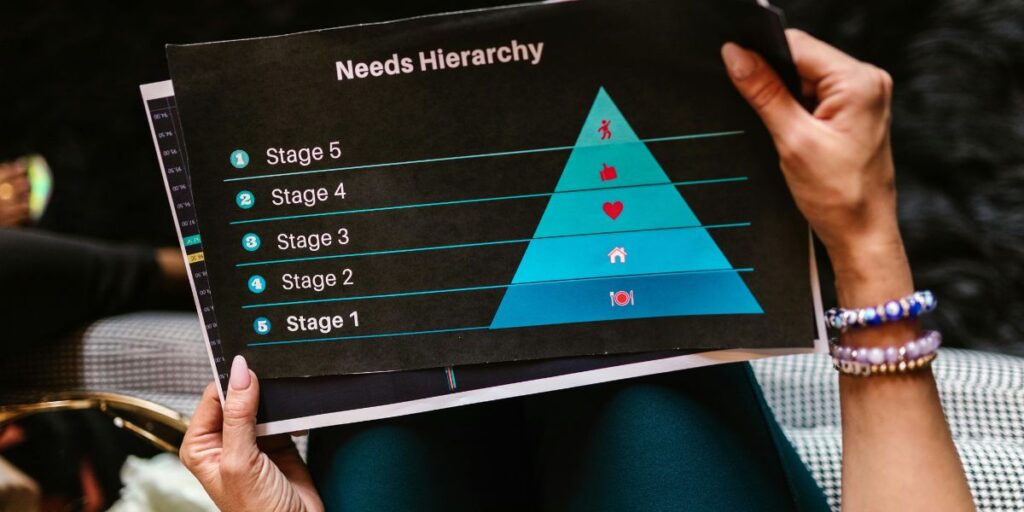

The first step in how to do ecommerce seo india is always a technical audit — because no amount of keyword optimisation or content creation will produce consistent rankings if Google cannot efficiently crawl and index your store. A comprehensive technical audit covers six critical areas.
First, crawl health — identifying broken links, redirect chains, and crawl budget wastage. Second, page speed — measuring Core Web Vitals scores for both mobile and desktop. Third, mobile performance — verifying your store’s usability across India’s most common smartphone models. Fourth, duplicate content — particularly critical for Shopify stores, which generate duplicate product URLs through collections. Fifth, canonical tag configuration — ensuring Google correctly identifies your preferred URLs. Sixth, schema markup — confirming Product, BreadcrumbList, and Organisation schema is correctly implemented.
Fix the issues uncovered by this audit before moving to any other stage of your ecommerce seo plan in India. A technically clean store that Google can read and index efficiently is the prerequisite for everything that follows.
The second step in your ecommerce seo plan India is building a keyword map that connects your product catalogue to the exact search queries your buyers use on Google India. This means going beyond generic category terms to identify three layers of keywords for each product area. The first layer is head terms — the broad, high-volume keywords that describe your category, such as ‘women kurtas online india’ or ‘wireless earphones under 2000’. These are competitive but drive high volumes. The second layer is product-specific keywords — more specific queries tied to individual product attributes, such as ‘linen cotton kurta set india’ or ‘anc earphones under 3000 india’. These convert at higher rates because they match more specific buyer intent.
The third layer is long-tail buyer queries — highly specific, question-based searches like ‘best kurta for office wear india 2026’ or ‘which anc earphones work best with iphone india’. These have lower individual volume but exceptionally high conversion rates and far lower competition. Map all three keyword layers to specific product pages, category pages, and blog content — and mark any keyword groups without an existing page as content gaps requiring new pages or posts. This keyword mapping is the backbone of your entire ecommerce seo plan india.


The seo strategy for shopify india — and for WooCommerce and Magento stores equally — involves optimising every element of every key page type in your catalogue. For product pages, this means: rewriting product titles to lead with the primary keyword (not the brand SKU code), crafting unique product descriptions of at least 150 words (manufacturer copy-pastes trigger Google’s duplicate content filters), optimising the meta title and meta description for each product, adding keyword-rich image alt text to every product photo, and implementing Product schema with price, availability, and star rating markup for rich SERP results.
For category pages, the seo strategy for shopify india prioritises: adding a 100–150 word keyword-rich category description at the top of each collection (most stores leave this completely blank), building clean internal linking between parent categories and subcategories, targeting high-volume category-level head terms in the page title and H1, and adding BreadcrumbList schema to improve navigation signals to Google. For most Indian e-commerce stores, category page optimisation alone — when done correctly — produces 25–40% organic traffic increases within 90 days because category pages collectively receive more search impressions than any other page type in a store
The fourth component of your ecommerce seo roadmap India addresses the two factors that determine whether your store achieves and maintains Page 1 rankings for competitive head terms: content authority and backlink authority.
Content authority is built through a consistent content marketing programme — buyer guides, comparison articles, how-to posts, and FAQ pages that target informational keywords in your niche and link back to relevant product and category pages. A home furniture store that publishes ‘How to Choose the Right Sofa for a Small Living Room India’ and ranks for that query will consistently funnel research-stage buyers into its sofa category — traffic that costs nothing beyond the content creation investment.
Backlink authority is built through white-hat outreach to relevant industry publications, niche directories, and complementary brands. For Indian e-commerce stores, some of the most valuable backlink opportunities come from Indian lifestyle media (publishing original research or data about your category), supplier and brand partnership pages, and industry association directories. Together, content and backlinks form the ecommerce seo roadmap india that transforms a technically sound, well-optimised store into a search authority — one that Google consistently ranks above competitors because it has demonstrated both relevance (through content depth) and trust (through earned backlinks).
📊 ECOMMERCE SEO STRATEGY INDIA — 5-STEP ROADMAP TABLE (Add this table in the blog post)
Place after the opening paragraph / within the first H2 section. This table is a high-value visual and AI Overview eligible.
Step | Action | Timeline | Expected Impact |
|---|---|---|---|
1 | Technical SEO Audit & Fixes — crawl errors, speed, mobile, canonical, schema | Weeks 1–4 | Google reindexes correctly; ranking floor rises |
2 | Keyword Research & Mapping — 3 layers per category, mapped to all pages | Weeks 2–3 | Clear content gaps identified; no keyword cannibalisation |
3 | On-Page Optimisation — product titles, meta, descriptions, alt text, schema | Weeks 3–6 | 30–50% increase in organic impressions within 60 days |
4 | Category Page SEO — descriptions, internal links, H1/H2 targeting | Weeks 4–8 | 25–40% category traffic increase within 90 days |
5 | Content + Link Building — buyer guides, FAQ posts, authority backlinks | Month 2 onwards | Compounding organic traffic growth; Page 1 for head terms |
For a new Indian online store, start with the technical foundation before anything else. Ensure your store is fast (Core Web Vitals passing), mobile-optimised (70%+ of Indian traffic is mobile), and free of crawl errors. Then build your keyword map — identify the three layers of keywords for each product category and map them to your pages. Only after the technical base and keyword architecture are in place should you begin on-page optimisation of product and category pages. A new store that skips the technical foundation will see inconsistent ranking results regardless of how good the content is.
For most Indian online stores, the ecommerce seo plan india timeline runs as follows: weeks 1–4 produce technical fixes and on-page optimisation; months 2–3 see initial ranking improvements for long-tail and secondary keywords; months 4–6 deliver consistent first-page rankings for product and category pages; months 6–12 produce the most significant compounding organic traffic growth as content authority builds. Stores with existing domain authority and clean technical foundations see improvements faster than brand-new stores. The key is consistent execution across all five steps simultaneously — not sequential phases.
The core principles of the seo strategy for shopify india and WooCommerce are identical — technical health, on-page optimisation, content, and authority. However, the technical implementation differs significantly by platform. Shopify requires specific handling of duplicate product URLs created by its collections structure, and its built-in blog is limited for content strategy compared to WordPress. WooCommerce on WordPress is more flexible for content and SEO configuration but requires more technical management. For both platforms, the on-page optimisation and content strategy components of the ecommerce seo roadmap india are essentially the same.
Each product page in your ecommerce seo plan india should target one primary keyword and two to three secondary keywords that are semantically related. The primary keyword should appear in the product title, meta title, H1, and the first 100 words of the product description. Secondary keywords should be woven naturally into the product description, image alt text, and meta description. Targeting too many keywords per page — a practice called keyword stuffing — dilutes your page’s relevance signal for all terms and hurts rankings across the board. One primary, two to three secondary per page is the right density for Indian e-commerce product pages.
Yes — unique product descriptions are one of the highest-impact actions in any ecommerce seo strategy india. Manufacturer descriptions appear on dozens or hundreds of websites, triggering Google’s duplicate content filters and preventing your store’s product pages from ranking. Even a 150-word unique description that incorporates your target keywords, addresses common buyer questions, and includes specific product attributes produces significantly better rankings than the manufacturer copy. For stores with large catalogues, prioritise unique descriptions for your top 20% of products by revenue first — then systematically work through the remainder. The ROI on this investment is consistently among the highest of any e-commerce SEO activity.
The single biggest mistake in ecommerce seo strategy india is treating SEO as a one-time project rather than an ongoing programme. Most Indian stores make one round of changes — update some meta titles, write a few product descriptions — and then stop, expecting permanent results. But Google’s algorithm is dynamic, competitors are continuously optimising, and an ecommerce store’s product catalogue is constantly changing. A successful ecommerce seo roadmap india requires monthly technical health checks, quarterly keyword research updates to capture new search trends, continuous content production, and an active link building programme. Stores that treat SEO as an ongoing investment consistently outperform those that treat it as a one-off task.
💡 Ready to Build a Complete E-Commerce SEO Strategy for Your Indian Store?
One Digital Land’s e-commerce SEO team creates and executes complete five-step SEO programmes for Indian online stores — covering technical audit, keyword mapping, on-page optimisation, content strategy, and authority building.
Free audit to start.
✓ Free store audit ✓ Custom 5-step roadmap ✓ Platform expertise: Shopify & WooCommerce
An ecommerce seo strategy india is not a single action or a quick fix — it is a layered system where each component amplifies the others. Technical health enables efficient indexation. Keyword mapping ensures every page targets the right query. On-page optimisation maximises the ranking potential of each page. Content marketing builds topical authority and captures buyers earlier in their journey. Authority and link building signals to Google that your store deserves to rank above competitors. When all five components are active and consistent, your ecommerce seo roadmap india produces compounding organic growth that fundamentally changes the economics of customer acquisition for your store.